

Some best practices for those wanting to photograph ghosts...
Ghost photography, when it actually occurs, captivates our imagination; yet no one knows when or how the camera will photograph a ghost, exactly. Perhaps it is the camera's ability to record the energy exhibited by ghosts, however so fleeting, in a varied light spectrum; but whatever is happening, some fantastic ghost photos of orbs, ectoplasm, vortexes, apparitions and energy have been recorded with photography. So, to improve one's odds in photographing something paranormal, it is important to know a little bit about capturing ghosts on film or digital images.
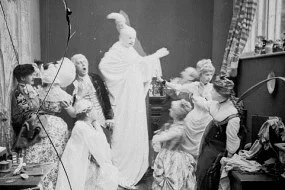 With seemingly no rhyme or reason, most ghost pictures are captured by accident - unexpectedly. That said, most of the anomalies captured in ghost photography are really not ghosts at all - many are explainable phenomenon and something we can work to eliminate. Therefore, it is important to understand what a camera strap, dust, moisture, rain, snow, breath, insects, cigarette smoke, flash reflection, solar flare, fingers, hair and a dirty lens look like when found in front of the camera's lens. This way, one will be able to tell real ghost photography from false or fake ghost pictures. It is also important to be aware of flash and exposure time settings - a slow shutter speed found in night time camera settings will produce amazing light bars and hazes, none of which are spirits.
What to Avoid When Photographing Ghosts
Most ghost hunters today are using digital cameras because they are easier and less expensive to work with and easier to upload images to a computer for examination and editing. Plus, you can delete all the images that are not paranormal (which will be most of them). Novice ghost hunters prefer the digital camera to the old standard 35mm models because of the sheer amount of orbs that appear in many of the pictures with cheaper, point-and-shoot cameras. It's common for new ghost investigators to think that if they capture a ton of orb photos, just maybe, some of them will be real ghosts. Most of these orbs, however, are caused by flash reflection off of reflective surfaces, dust, pollen, moisture, dampness, and even insects. A good 35mm camera works great using AS400 film, and there will be less false positives - and some truly great ghost pictures have been taken with film; but if you do not want to use a film camera, then we recommend using a dust hood over the digital camera lens or purchase of a full spectrum camera used in conjunction with Infared light to eliminate most of the camera-created anomalies.
Ghost Photography How-tos
Having said all that, you need to take a lot of pictures for good ghost photography as there will only be a few out of many (maybe hundreds) that might be real ghost photos. Follow your gut instinct as to where and when to shoot. Take pictures in multiple at a time. Be sure and keep your camera lens clean, the camera strap removed, long hair tied back, and fingers away from the camera lens and flash unit (see false shadow ghost pictures). Ghost photography should not take place during dampness, snow, rain, foggy or smoky conditions. If it is cold, you must learn to hold your breath while snapping ghost photographs. Reflective surfaces, such as glass, mirrors, metal, and even shiny walls should not be photographed or they will produce orbs and strange results that are not ghostly. Even aiming the camera into the sun, will produce orb-like solar flare anomalies and should be avoided. The best advice is to be aware of your surroundings during ghost photography, especially around mist generating fountains, creeks, waterfalls and snow melting in warmer temperatures. And as mentioned prior, be sure your flash settings are not producing false energy pictures (orange haze) and that the camera is not set on a lengthened exposure time (which can also produce false apparition photos).
Infrared Ghost Photography
Infrared ghost photography is intriguing, but expensive and difficult to master. It is believed to be better, however, at capturing ghosts without false positives. Infrared photography registers and captures radiation that we cannot see, as it sees in a different spectrum of light. It detects radiation caused electro-magnetic fields, which are exactly what most ghost hunters believe ghosts exhibit.
Infrared ghost photography should be conducted without flash and in black and white film. The film must be refrigerated and loaded and unloaded in and out of the camera in total darkness. Also, different filters should be experimented with to determine what works best under certain conditions. Traditional IR ghost photography requires a lot of experimentation to get the hang of it, and should be studied in more detail.
Digital Infrared
In contrast, digital cameras with Infrared conversion can possibly work much better. First, one needs to test the digital camera to make sure it is not filtering out Infrared (most do). To do this, simply point a TV remote at the camera lens (depressing a button on the remote) and snap a photograph of it in the dark and with no flash. If you have a nice ball of light in your photo, your camera "sees" the Infrared laser of the remote and is good to use for Infrared photography. Otherwise, you will need a camera shop to remove your "IR-cut filter." There are several spectrum ranges of glass, poly and gel filters (which are made by Kodak and other manufacturers) that can be placed over the lens of the digital camera. The filter will block out visible light and only allow IR light to pass through it. For night time IR photography, you will need an Infrared light or blacklight bulb. More experimentation with this type of photography has been done within the ghost investigation community over the past 5 years including work with the full spectrum camera (sees the Near UV, Visible and Near Infrared spectrum).
For More on Ghost Hunting Cameras, Be Sure and Read:
Ghosts Camera
Full Spectrum Camera